Solar quoting is uniquely complex. System sizing, panel brands, inverter options, battery add-ons, grid connection fees, government rebates, finance packages. A customer asking for "a solar quote" could end up with half a dozen legitimately different proposals depending on budget, usage, and how much they care about brand names.
Most installers handle this by sending one quote. Maybe two if the customer asks.
That's leaving money on the table.
The Multi-Option Edge
Customers offered multiple options close at higher rates and higher values. A single quote forces a yes/no decision. Multiple options change the question from "should I buy?" to "which one?"
A customer who would've rejected a $14,000 single-system quote might happily choose the $11,500 option with a slightly smaller system. Or step up to $17,000 with a battery when they see it clearly alongside the base option.
The problem has always been execution. Building three detailed solar quotes with different components and savings projections takes forever. Most installers don't have the bandwidth.
$360K in a Single Month
Bolton EC, a solar and electrical installer, switched to multi-option quoting and closed $360,000 in accepted proposals in one month. The change wasn't magic. They built out their pricing system once, set up their tiers, and let the software generate all options automatically.
Instead of 30-45 minutes per quote, they were producing 6-8 options per customer in under 5 minutes. Same information, same professionalism, dramatically less admin.
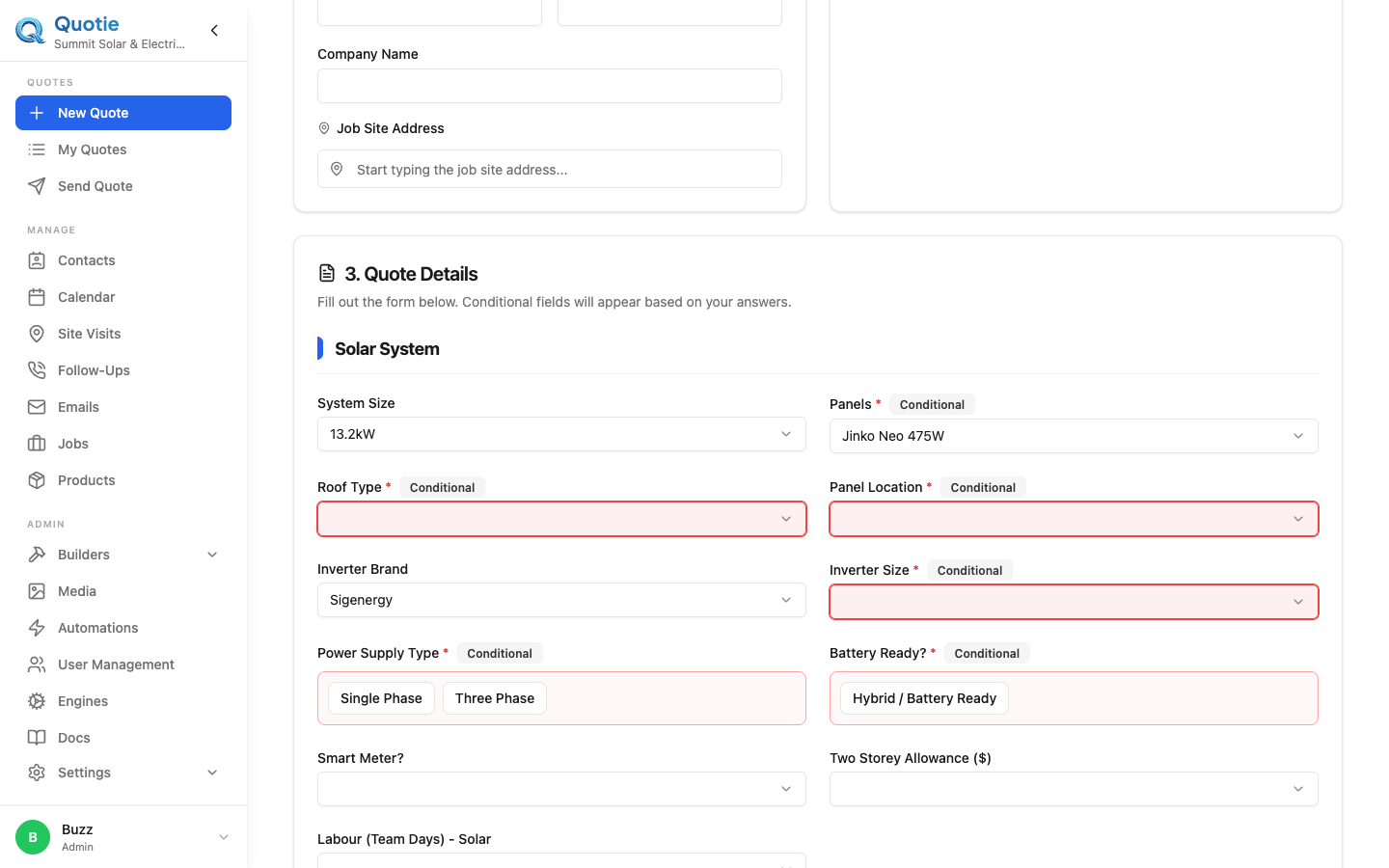
The key: all the complexity was handled by the system. System size calculations, component pricing, rebate logic, finance options. The salesperson's job was understanding the customer's situation and picking the right config. Not crunching numbers and formatting documents.
Setting Up Your System
The setup is real but one-time:
Package tiers. Most solar businesses have a natural good-better-best structure: entry-level (6.6kW, Tier 2 panels), mid-tier (10kW, Tier 1 panels), premium (10kW+ with battery). Formalise these as your base packages.
Component library. Every panel, inverter, battery gets a line item with your cost, retail price, and margin. You do this once. Adding a new product after that takes 30 seconds.
Calculation rules. Labour scales with system size. Scaffolding applies above certain roof pitches. Phase type affects inverter options. These rules go in the system, not in your head.
Finance options. If you offer finance, build repayment calculations into your templates so customers see monthly costs alongside cash price automatically.
Rebate logic. The calculation formula doesn't change even when rebate values do. Build it once, every quote reflects current rates.
What the Customer Gets
A professional solar proposal showing:
- System specifications (size, panels, inverter, optional battery)
- Upfront cost after rebates
- Estimated annual savings and payback period
- Monthly finance repayments (if applicable)
- All options side by side
No follow-up calls asking "what size system was that again?" or "can you add a battery option?" It's all there.
Speed Wins Jobs
Solar leads are competitive. Customers get 3-5 quotes. The installer who gets a professional multi-option proposal back first has a real advantage. Not because they're cheaper, but because they look more organised and responsive.
If your process means customers wait 2-3 days for a quote, you're losing to the installer who gets back to them same-day.
Book a demo and we'll walk through building your system configuration.