You've done the site visit. Worked out the scope. Calculated the price. Now you send the quote.
This is where most trades businesses let themselves down. Not the price — the document. If yours looks like a spreadsheet printout while the competitor's looks like a real proposal, you're behind before the client reads a single number.
A quote is a sales document. Often the only thing a customer compares between you and three other businesses. Here's what the good ones include.
1. Branded Cover Page
Your quote should open with a clean cover page — logo, company name, project title. Not a wall of text. Not a table of figures. Just a clear first page that says "this business takes itself seriously."
Most trade quotes we've seen are either a plain email with a PDF that opens straight into pricing, or a Word doc with a logo jammed in the header. Neither builds confidence.
2. Clear Scope of Work
Before the customer sees a dollar figure, they should know exactly what you're doing. Plain language — not trade jargon, not part numbers.
"Supply and install a 10kW solar system with 20 x 500W panels on the north-facing roof, one 8kW hybrid inverter in the garage, and a 16kWh battery with backup on the internal garage wall."
Specific. No ambiguity about what the price covers.
3. Product and Material Specs
Customers comparing multiple quotes want to know what they're getting. List key products with enough detail to differentiate from cheaper alternatives:
- Brand and model
- Key performance specs (capacity, efficiency, warranty)
- Configuration (how many, how they're arranged)
This is where you justify your price. If you're quoting premium panels with a 25-year warranty while the competitor is using budget panels with 10, this section makes it visible.
4. Transparent Pricing Breakdown
A single lump sum with no breakdown looks like you're hiding something. Break it out:
- Materials/products — panels, inverter, battery (or sheeting, flashings, fixings)
- Labour — days, team size
- Additional works — access equipment, travel, removal
- Subtotal → GST → Total
- Rebates shown as a deduction
- Deposit and balance
When a customer can see that $3,200 is labour, $8,500 is materials, and $2,100 is rebated — the total feels justified. When it's just "$12,800 inc GST," they're comparing on price alone.
5. Savings and ROI
The most underused section in trade quoting. Most businesses skip it or include a vague "you'll save on power bills."
The ones closing at higher rates show real numbers: current costs, projected costs, monthly savings, payback period, and lifetime return — tailored to the customer's actual usage.
When a customer sees their $20,000 system saves $2,400/year and pays for itself in 9 years with 15+ years of free energy after that, the conversation shifts from "is this worth it?" to "when can you start?"
6. Terms and Conditions
Warranty details, payment terms, quote validity, exclusions. Clear terms prevent the "I thought that was included" conversation after the job starts.
Keep it readable. Short paragraphs, plain language. The goal is that the customer actually reads it.
Why Most Trades Don't Do This
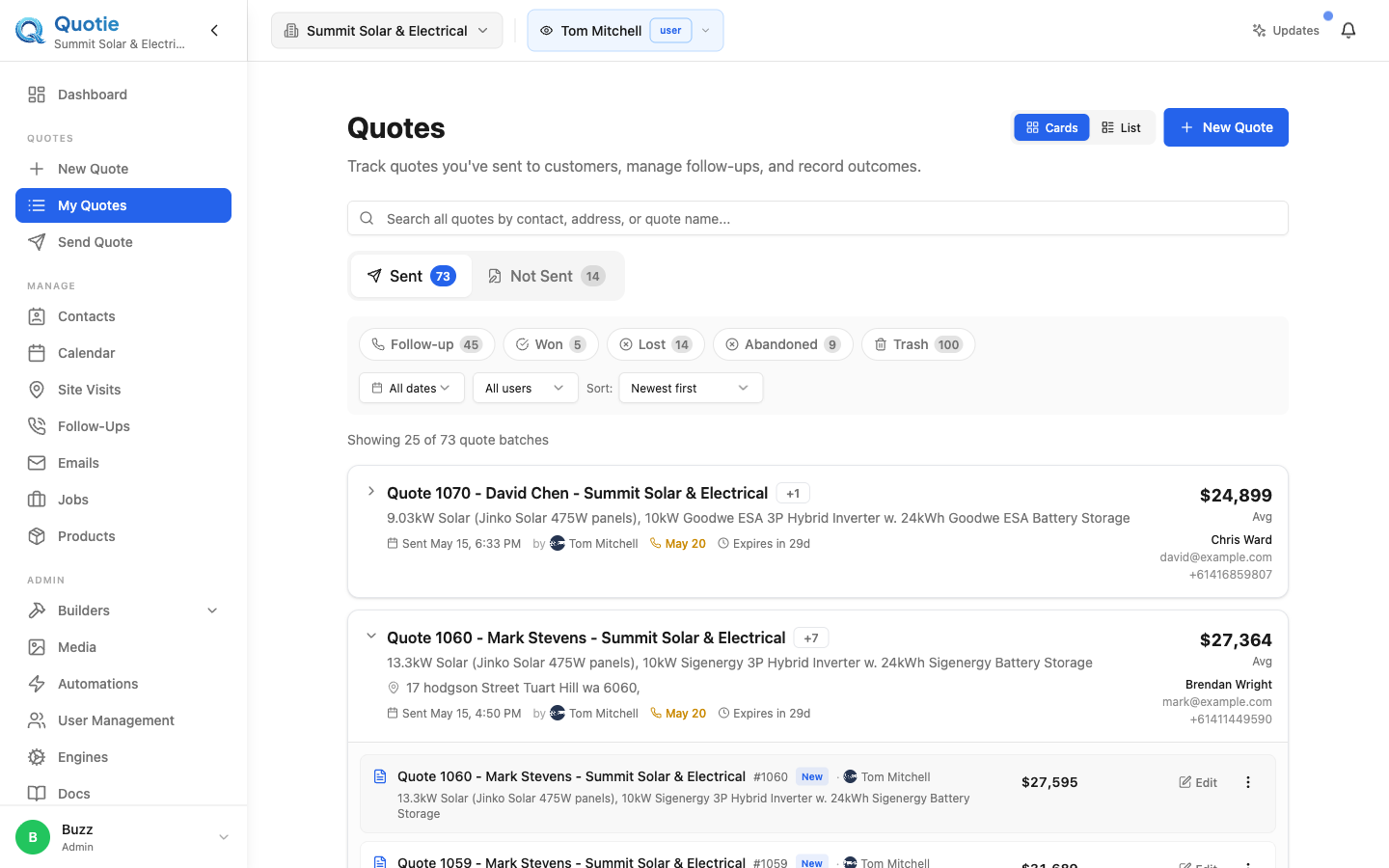
Building a quote with all these sections manually — calculating rebates, formatting a branded PDF, projecting savings — takes an hour. At 10 quotes a week, that's a full day of admin.
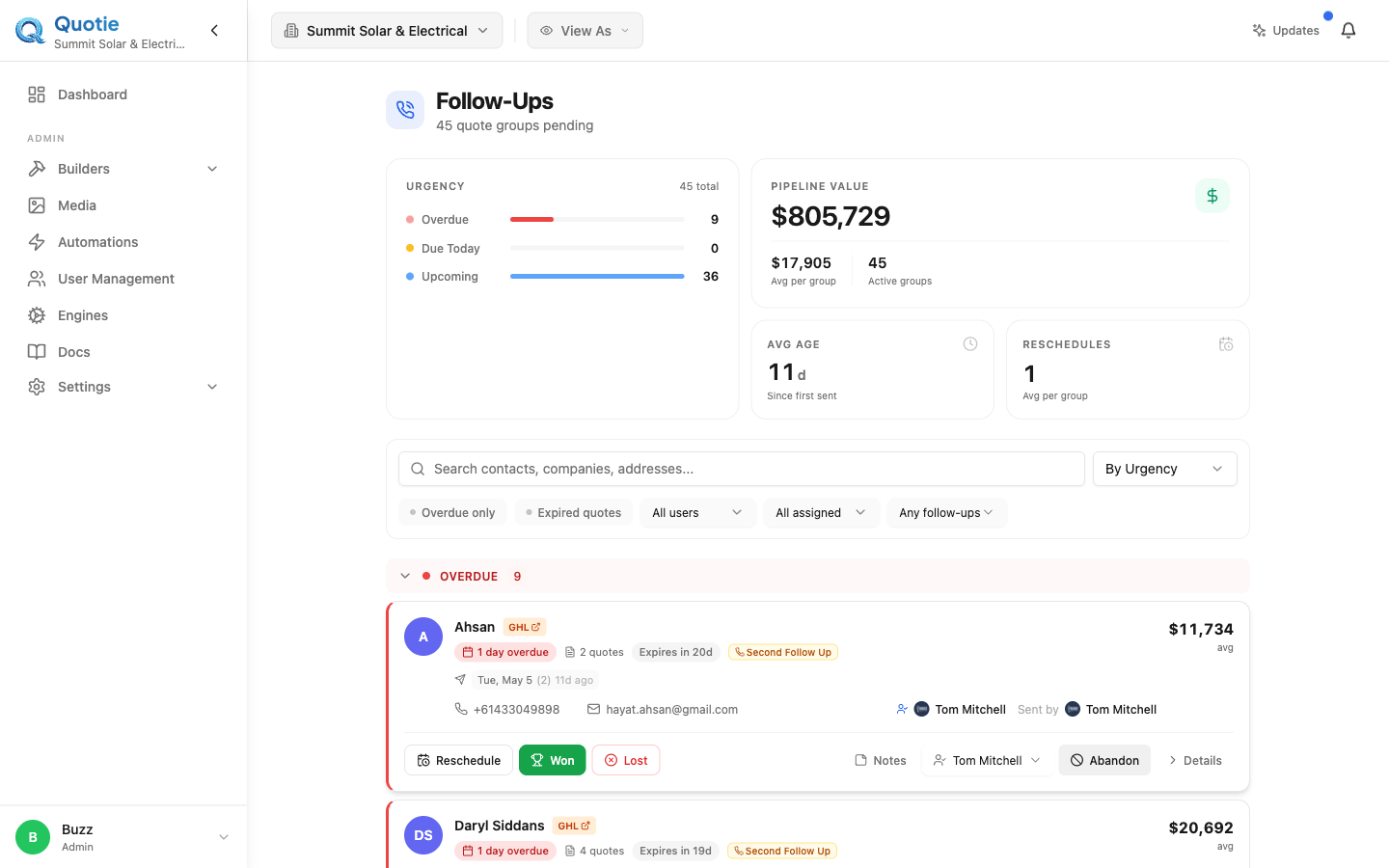
That's why your quoting system should handle the structure, calculations, and formatting automatically. You enter the job details. The system generates a complete proposal with every section populated — in under 30 seconds.